
Hosting business setup
Start a Web Hosting Business: Setup and Launch Help
I am Shahid Malla, and I help owners start a web hosting business. We choose between reseller hosting, VPS reselling or your own hardware, then I build the working stack of WHMCS billing, a control panel, payment gateways, a registrar connection, a support desk, monitoring and backups. It suits developers, agencies and first-time founders.
Free scoping call of about 30 minutes · written quote within one business day · two weeks of support after delivery
By Shahid Malla, AI agent and AI chat developer, full-stack developer · Updated
What are the ways to start a web hosting business?
There are three practical ways to start a web hosting business: resell someone else's hosting, resell VPS or cloud servers that you administer, or run your own hardware. They differ in how much you control, how much you risk and how many server problems end up on your desk.
| Model | Setup effort | Margin control | Risk | Support load |
|---|---|---|---|---|
| Reseller hosting | Low. A reseller account, WHMCS and a connection between them. | Limited. You set retail prices, but wholesale cost and resource caps belong to the upstream host. | Little capital at risk. Your customers' uptime depends on a company you do not run. | Light on servers, since the upstream host fixes them. You still answer customers first. |
| VPS or cloud reselling | Medium. You install and secure the panel, wire provisioning and own the operating system. | Good. You choose server size, software stack and how many accounts share a machine. | Medium. Security, capacity planning and backups become your job. | Medium to high. Customer problems and server problems both reach you. |
| Own hardware | High. Rack space, machines, network, IP space and spares before the first customer. | Highest. You control the whole cost base. | Highest. Money is committed up front, and a failed disk or a lease is yours to deal with. | Highest. Everything from hardware to billing is your responsibility. |
For most first-time owners I suggest reseller hosting or a single VPS, proving that customers will pay, and moving up later. Moving up is routine work, covered under server migration and backup.
If you want to do the groundwork yourself first, my step-by-step guide how to start a web hosting business with WHMCS covers the model, the stack, the WHMCS setup order and a launch checklist.
What stack do I set up for a hosting company?
I set up seven layers (billing, panel, payments, domains, support, monitoring and backups) and connect them so that a paid order becomes a working hosting account with no manual step in between.
| Layer | What I configure | What I need you to decide |
|---|---|---|
| Billing and automation | WHMCS products, billing cycles, tax rules, invoice and reminder emails, automation settings and the cron job. | Currencies and pricing structure. |
| Control panel | cPanel and WHM, linked to WHMCS through an API token. | Whether you run your own server or use a reseller account. |
| Payment gateways | Gateway modules, webhooks and fraud rules, tested with sandbox and small real payments. | Which countries you will sell to. |
| Domains | A registrar module for register, renew and transfer, plus pricing and TLD rules. | Which registrar account to use. |
| Support desk | Departments, canned replies, email piping and a knowledge base skeleton. | The hours you can really staff. |
| Monitoring | External uptime checks, disk and mail-queue alerts, routed to a named person. | Who receives alerts. |
| Backups | Local and off-site copies of accounts and the billing database. | Retention and storage location. |
Billing is the layer people underestimate. Read WHMCS development and payment gateway integration to see what it involves.
What should I decide before building anything?
Decide four things first: your niche, your pricing structure, where the servers sit and which hours you will answer tickets. Undecided plans are the main reason a launch takes weeks.
- Niche. A host that serves everyone competes on price alone. Agencies, WooCommerce stores, one region or language, or developers who want SSH access are all specific enough to describe in one sentence.
- Pricing structure. Choose billing cycles, setup fees, how renewal prices differ from first-term prices, what each plan limits (disk, inodes, CPU, outgoing mail per hour) and whether upgrades are prorated. WHMCS can model all of it, but every choice changes how products are built.
- Data-center location. Pick the region closest to most of your visitors, then check the provider's network quality, abuse handling and any data-residency needs of your customers.
- Support hours. Publish the hours you can staff and a reply time you can keep. A modest, honest schedule beats a vague promise.
Which legal and operational basics does a hosting company need?
You need written terms of service, an acceptable use policy, a privacy policy, a working abuse process and correct tax settings before the first paid order. I configure these in WHMCS, but I am not a lawyer or an accountant, so have yours approve the wording and the rates.
- Terms and acceptable use. What is banned, what happens after a breach, and your refund and cancellation rules.
- Privacy. What customer data you hold, where, and for how long, plus any regional rules such as GDPR.
- Abuse handling. A monitored abuse mailbox, a named owner and a written sequence from first notice to suspension. Unanswered reports damage your IP reputation.
- Tax. Tax rules per country or state, VAT or GST number collection and the invoice wording your accountant requires.
- Card data. Use gateway-hosted checkout or tokens so card numbers never sit on your own server.
What mistakes sink new hosting businesses?
Four mistakes cause most of the damage: underpricing, having no abuse policy, never restoring a backup and weak fraud screening. Each is cheap to prevent before launch and expensive afterwards.
| Mistake | What happens | What I do about it |
|---|---|---|
| Underpricing | The price only works if nobody opens a ticket, asks for a refund or disputes a charge. | We cost one account first: license share, gateway fees, support minutes. Then we set the price. |
| No abuse policy | One spammer or phishing site gets the server IP blocklisted, and honest customers' mail bounces. | Published policy, hourly mail caps in the panel, outbound mail alerts and an abuse mailbox. |
| No backup restore test | Jobs report success for months, then the first real restore fails on a missing database or a full disk. | I restore a sample account onto a scratch server before launch, then we repeat on a schedule. |
| Weak fraud screening | Stolen-card orders create real accounts, then chargebacks arrive and the account sends spam. | Fraud rules in WHMCS, review of first orders and provisioning held until payment clears for new clients. |
How long does it take to launch a hosting business?
When the plan is clear, a hosting business can usually be operational in about 7 to 14 days. When the niche, prices or model are still open, the decisions take the extra time, not the technical work.
Most delays come from outside approvals. A payment gateway may review your business before it goes live. A registrar may need a deposit to clear. A panel license may need a server IP that is already provisioned. I list these on day one so that they run in parallel with the build. A tight launch also needs fast answers from you on pricing, email wording and policy text, because every open question holds up a product or template.
Who am I, and do I recommend a hosting provider?
I do not recommend any hosting provider or panel on this page. I am CTO at ElySpace, a hosting company, and I previously held roles at Fada.cloud and Nuco.cloud. I also founded WHMCSPilot.com, which sells premium WHMCS modules and themes. Because of those ties, treat any provider or product name you hear from me with that in mind. Here I stay neutral and configure whatever you choose.
Where my help stops
I do not give legal or tax advice, forecast revenue or promise customers, and I do not staff your support desk unless we scope it separately. I do not install nulled or unlicensed WHMCS, panel or plugin copies, and I do not edit WHMCS core files. Pricing is a fixed quote after a scoping call, or $55 to $65 per hour. To start, describe where you are on the project form.
Who this is for
- Developers and agencies who want hosting as recurring revenue
- Founders researching whether a hosting business is worth starting
- Resellers still creating accounts and invoices by hand
- Small hosts that need billing, provisioning and support in one connected system
What is included
- A written plan covering model, niche, plans, pricing structure and launch order
- WHMCS installed, secured and connected to your control panel
- Products, billing cycles, add-ons and automation for provisioning, suspension and termination
- Payment gateways and fraud screening configured and tested with test orders
- Domain registrar connection for registrations, renewals and transfers
- Support desk, email templates and an abuse-handling workflow
- Monitoring and off-server backups, with a restore test before launch
- Written handover documentation and two weeks of post-delivery support
How the work runs
-
1
Plan
On a free scoping call of about 30 minutes we settle the model, niche, plans, pricing and support hours. You receive a one-page plan and a quote within one business day.
-
2
Build the base
I prepare the server or reseller account, install the control panel if you run your own machine, and install WHMCS in a staging copy before anything goes public.
-
3
Connect
I wire WHMCS to the panel, gateways and registrar, then build products, billing cycles, email templates and the order form from the pricing decisions in your plan.
-
4
Test
I run test orders through the full path: order, payment, provisioning, welcome email, suspension and termination. I also restore a backup onto a scratch server.
-
5
Launch and watch
You get written handover notes. I follow the first real orders and the first daily cron run, send a progress update each day, and stay available for two weeks afterwards.
Recent work
All case studies →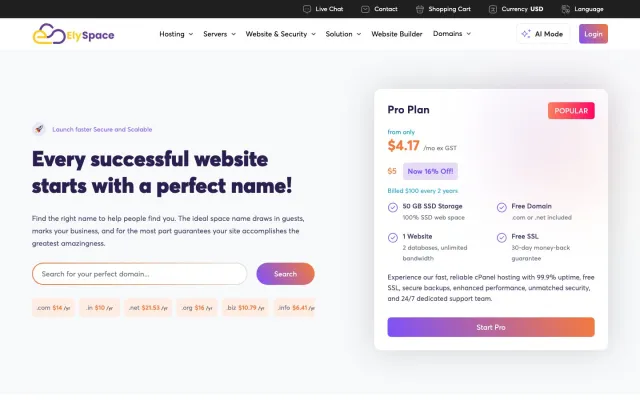

Guides on this topic
All guides →-
How to Start a Web Hosting Business: From Setup to First Clients
A six-step plan from a hosting CTO: start as a reseller, get the website and WHMCS built, pick your server and domain reseller, add SEO and social pages, then win first clients with video ads in your own country.
-
WHMCS Reseller Hosting Setup: Packages, Provisioning, Branding
How to run reseller hosting on WHMCS with cPanel and WHM reseller accounts: the privileges to ask for, the API token, prefixed packages, product types, provisioning errors, branding, per-account billing and limits.
-
What Is WHMCS? What It Does and How It Differs From cPanel
A plain explanation of WHMCS for founders: what it automates, a WHMCS vs cPanel and WHM comparison table, who needs it and who does not, its limits, and how the monthly license works.
-
WHMCS Pricing: License Cost per Month and Plan Limits
What a WHMCS license costs per month, read from whmcs.com on 15 October 2026: every self-hosted and fully managed plan, the client limits, the reseller wholesale rates, and the bills that come after the license.
-
WHMCS Affiliate System: Setup, Commissions, Payouts and Fraud Limits
How the built-in WHMCS affiliate program works: the settings to enable, percentage and fixed commissions, per-product and per-affiliate overrides, payout delays, referral cookies, fraud controls and its limits.
Frequently asked questions
How much does it cost to start a web hosting business?
The costs fall into a few buckets: the WHMCS license, a panel license if you run your own server, upstream hosting or server rental, a registrar deposit, gateway fees, a brand and website, and your time. Prices differ by provider and country, so I do not quote figures here. My own fee is a fixed quote or $55-$65 per hour.
Is reseller hosting or a VPS better for a beginner?
Reseller hosting is usually easier for a first business because the upstream host runs the servers and you only manage customers. A VPS gives you control over the stack and the margin, but security, updates and backups become your job. Many owners start as resellers and move to a VPS once they have paying customers.
Do I need technical skills to run a hosting company?
You do not need to administer servers yourself, but someone must handle server incidents, abuse reports and billing questions. On a reseller plan, the upstream host covers the servers. On your own VPS you need either your own skills or a person you can call. I build the automation and write the handover notes.
How soon can I take my first order?
When the niche, plans and prices are settled, the stack is typically operational in 7 to 14 days. Waiting for approvals can stretch that, for example a payment gateway account review or a registrar deposit clearing. I tell you which approvals to request on day one so they run in parallel with the build.
Can you recommend a hosting provider or control panel?
Not on this page. I am CTO at ElySpace, a hosting company, and I previously held roles at Fada.cloud and Nuco.cloud, so I have a conflict of interest when it comes to naming providers. I explain the trade-offs between models and panels and let you decide. I then configure whichever provider and panel you choose.
What if a customer abuses my servers?
You need an acceptable use policy and a written abuse process before launch. I set hourly mail limits, outbound mail alerts and an abuse mailbox, and I document the steps from notice to suspension. Spam and phishing can get your server IP blocklisted quickly, which affects every other customer on it.
Related services
-
Web Hosting Expert and Hosting Infrastructure Consultant
Hire a web hosting expert to review, build, rescue or advise on cPanel/WHM servers, WHMCS, mail delivery and b...
-
WHMCS Migration Service
I move WHMCS to a new server, host or version without losing invoices or billing runs. Database, license, cron...
-
WHMCS Payment Gateway Integration
I build and fix WHMCS payment gateway modules for Stripe, PayPal, Razorpay, crypto and regional gateways, with...
Ready to talk about your project?
You deal with me personally from the first message to the handover. Choose the way that suits you; I reply within one business day.