
Claude AI expert
Hire a Claude Code Developer: Claude AI Expert for SaaS and CRM
I am Shahid Malla, a Claude Code developer with 13+ years of experience who builds software with Claude Code, OpenAI Codex and AI agents. Companies and founders hire me to turn a SaaS, CRM, app or internal tool into tested, working software in weeks instead of months, with every change planned and reviewed by me.
Free scoping call of about 30 minutes · written quote within one business day · two weeks of support after delivery
By Shahid Malla, Freelance WHMCS developer and web developer · Updated
What does a Claude Code developer do for your project?
A Claude Code developer turns your idea into working software by directing AI coding agents the way a lead engineer directs a team. I write the spec, prepare the repository and its rules, hand small tasks to Claude Code and OpenAI Codex, and review, test and merge what they produce. You get the output of several developers working in parallel, with one experienced person answerable for every line.
That last part is what separates engineering with AI from prompting until something appears to work. An agent can write a login form in a minute; it can also store passwords badly, skip a permission check or quietly change a file it was not asked to touch. Thirteen years of building SaaS products, CRMs, WHMCS modules and hosting systems is what lets me spot those mistakes in review and design the work so they are rare.
What can I build for you with Claude Code and Codex?
Anything I could build by hand, I now build faster with agents. These are the projects I take on most:
| Project | What the agents speed up | What I decide and check myself |
|---|---|---|
| SaaS product | Screens, CRUD, API endpoints, tests, admin panel | Data model, tenancy, billing logic, security |
| CRM or internal tool | Fields, pipelines, imports, reports, notifications | Roles and permissions, data migration rules |
| Mobile app and its backend | Screens, API client, push notifications, tests | App store rules, offline behavior, data sync |
| AI agents and chatbots | Tool wrappers, prompts, evaluation scripts | What the agent may do alone, spend limits, hand-off to people |
| WHMCS modules and integrations | Module functions, hooks, API calls, admin screens | Billing correctness, upgrade safety, provisioning edge cases |
| Automation between your tools | Webhook handlers, sync jobs, retries, logs | Failure handling and who is alerted |
If you need a CRM quickly, the custom CRM in 7 days offer is this same method applied to a fixed scope.
How much faster is development with AI agents?
Much faster on the parts that are code, and no faster on the parts that are decisions. In my own work, a project I planned as six months before AI agents now ships in about 7 days when it builds on code I already have, and a roadmap I once quoted as a year takes about 15 days. Three things produce that speed:
- Base code from 13+ years of projects. Authentication, roles, billing, imports, PDF documents, payment webhooks and admin panels already exist and are tested, so agents extend them instead of inventing them.
- Parallel agents. Several tasks run at once in separate branches, while I plan the next ones and review the finished ones.
- Automated tests. Every change is checked in minutes, so speed does not turn into regressions.
What does not get faster: agreeing on the scope, waiting for outside approvals such as payment provider checks or app store review, cleaning years of messy data, and your team learning the new tool. I plan those into the date instead of hiding them.
How do you run Claude Code on a client project?
I run it as a controlled process, not a chat. The steps are the same on every project:
- Write the spec: users, screens, data model, roles and the acceptance tests the finished work must pass.
- Set the rules: a
CLAUDE.mdfile for Claude Code and anAGENTS.mdfile for Codex describe the architecture, conventions, test commands and forbidden actions. - Plan before editing: the agent proposes a plan for each task, and I correct it before it writes code.
- Work in branches: each task runs in its own branch or worktree, so parallel agents never overwrite each other.
- Gate every change: hooks run the formatter and tests automatically, and nothing merges until the tests pass and I have reviewed the diff.
- Connect tools carefully: where an agent needs documentation or a database, I connect it through an MCP server with read-only or test-only access.
How do you keep AI-written code secure and maintainable?
By treating the agent as a fast junior developer whose work always gets reviewed. Secrets and production credentials never enter a prompt or the repository. Agents get the narrowest permissions that let them do the task, and commands that delete data or touch production need my approval. Dependencies are checked before they are added. The code follows one architecture written down in the rules files, so it stays readable to the next developer, human or AI.
Can you fix a vibe-coded app that now breaks?
Yes, and it is a growing part of my work. Vibe-coded apps, generated quickly by prompting without a spec, often share the same problems: no tests, secrets in the code, missing permission checks, duplicated logic and a database that does not match the screens. I start with a written audit of what is safe, what is broken and what must be rebuilt, then add tests around the parts we keep and fix them in priority order. Sometimes a clean rebuild on my base code is faster, and I say so.
Can you set up Claude Code or Codex for our own developers?
Yes. For teams that want to keep building themselves, I set up the rules files, test and lint hooks, MCP connections and a review routine for your repository, then work alongside your developers on a real feature so the method sticks. For ongoing help after that, the monthly developer retainer keeps me available without a new quote for each request.
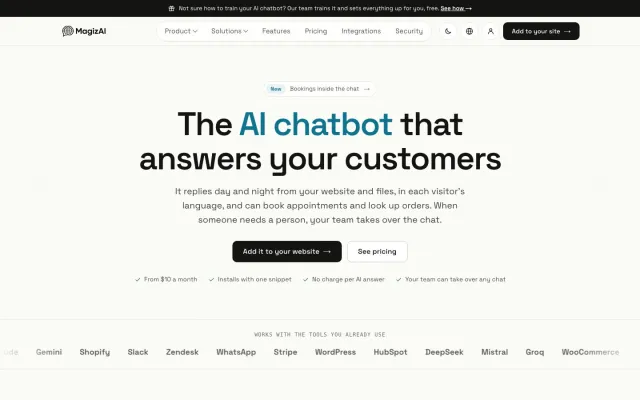
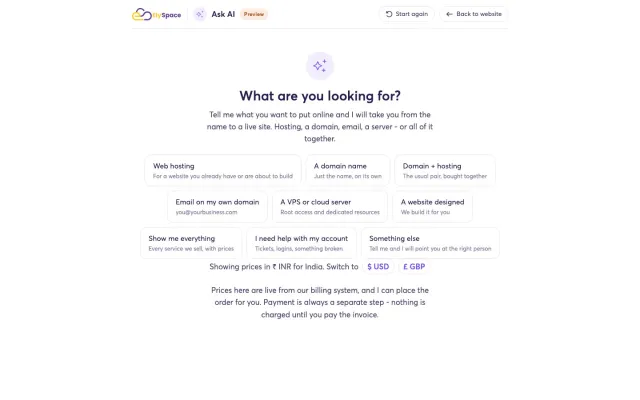
Disclosure: Claude and Claude Code are trademarks of Anthropic, PBC, and Codex is a product of OpenAI. I am an independent developer, not affiliated with or endorsed by either company. I am the founder of MagizAI, an AI chatbot product, and CTO at ElySpace; the work shown below includes projects for both.
Who this is for
- Founders who want a SaaS or app built and launched this month, by one accountable developer
- Companies that know AI coding agents are fast but need someone who has shipped real software to steer them
- Teams with a prototype made by prompting that now breaks, leaks or cannot be changed safely
- Businesses that need a CRM, portal, internal tool or WHMCS module without hiring a whole team
- Development teams that want Claude Code or Codex set up properly for their own repository
What is included
- A written spec with screens, data model, roles and acceptance tests before any code is generated
- A repository set up for AI agents: project rules in CLAUDE.md and AGENTS.md, test commands, linters and hooks
- Development by several agents in parallel branches, each change reviewed and merged by me
- Automated tests for every feature, run on each change, plus a plain-language acceptance checklist
- Staging deployment, a security review of secrets, permissions and dependencies, then production
- Repository, deployment notes, the agent rules files and a walkthrough, so your team can continue with AI
How the work runs
-
1
Scope call
We go through the users, the screens and the money flow. Within one business day you get a written spec and a fixed quote with a delivery date.
-
2
Prepare the repository
I set up the project, the base code it starts from, the test suite and the rules files the agents follow: architecture, naming, what they may run and what they must never touch.
-
3
Build with agents in parallel
Features are split into small tasks. Claude Code and Codex work on them in separate branches while I plan the next tasks and review each finished one.
-
4
Test and review
Every change passes the automated tests and my code review before it merges. Failing or unclear work goes back to the agent with exact instructions, or I write it myself.
-
5
Staging and acceptance
You use the software on staging with your own sample data and tick the acceptance checklist. I fix what you find the same day.
-
6
Launch and hand over
Production deployment, a walkthrough call, the repository and two weeks of support after delivery.
Recent work
All case studies →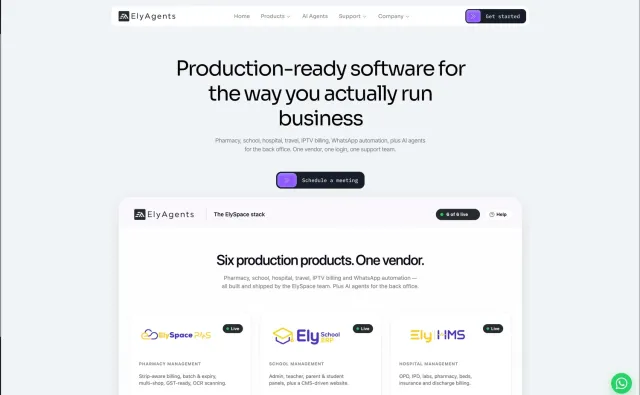
Guides on this topic
All guides →-
My Claude Code Workflow for Client Projects: Steps and Guardrails
How I run Claude Code, with Codex as a second agent, on paid client projects: the spec, the rules files, plan mode, worktrees, hooks, reviews, MCP limits, staging and the handover your team keeps.
-
Claude Code vs Codex for Building a SaaS: A Developer's View
A dated, hands-on comparison of Claude Code and Codex for founders and teams: surfaces, CLAUDE.md and AGENTS.md, extensions, parallel tasks, sign-in and billing, GitHub review, and which to pick for your situation.
-
Using AI Coding Assistants on Large WHMCS Module Projects
Where AI coding assistants help and fail on WHMCS module work, how to give them the official developer docs, what never to paste into a prompt, the review and test routine, and what still needs a developer.
Frequently asked questions
What is a Claude AI expert developer?
A developer who uses Anthropic's Claude, mainly through Claude Code, the agentic coding tool that works in a project's terminal and editor, to plan, write, test and fix software much faster than by hand, and who knows where the model goes wrong. The expertise is not in typing prompts. It is in writing the spec, setting the rules the agent follows, splitting the work, reviewing every change and keeping tests and security in place.
Are you certified, partnered or endorsed by Anthropic or OpenAI?
No. I am an independent developer and a heavy daily user of Claude Code and OpenAI Codex. I am not affiliated with, certified by or endorsed by Anthropic or OpenAI. Claude is a trademark of Anthropic, and Codex is a product of OpenAI; I name them only to say which tools I build with.
Is software built with Claude Code reliable enough for production?
It is when the process around the agent is strict. The same rules apply as to any developer's code: a written spec, automated tests that must pass, a human review of every change, a staging copy before production and a security check of secrets and permissions. Code that skips those steps is unreliable whether a person or a model wrote it. I do not merge anything I have not read.
Will my code or business data be used to train AI models?
I work through business and API access whose terms do not use your data for model training by default, and I check the current terms of each provider for your project. I never paste passwords, API keys or customer records into a prompt. Agents work on a copy of the code with test data, and production credentials stay in your hosting account.
What does it cost to hire a Claude Code developer, and who pays for the AI tools?
I quote a fixed price for a written scope, or bill $55 to $65 per hour. The Claude Code and Codex subscriptions I use while building are my own cost, not a line on your invoice. If your finished product calls an AI model while it runs, for example a chatbot or an agent, that usage is billed by the provider to your own account, and I set a monthly spending cap on it.
Is AI-assisted development the same as vibe coding?
No. Vibe coding usually means accepting whatever the model generates without reading it, which is fine for a weekend prototype. AI-assisted development keeps the engineering around the agent: a written spec, rules the agent must follow, automated tests, a review of every change and a staging copy before production. The agent writes faster; the developer stays responsible for what ships.
Do you use Claude Code or Codex?
Both, chosen per task. I use Claude Code for most planning, multi-file changes and long refactors, and OpenAI Codex for parallel tasks and second opinions in code review. The repository carries rules files for both, CLAUDE.md and AGENTS.md, so either agent, or your own developers later, follow the same conventions.
Can you work in our existing codebase with our developers?
Yes. I start by reading the code and running its tests, then write the rules files that describe your architecture and conventions, so the agents follow your style instead of inventing their own. Work arrives as normal pull requests that your team can review. If there are no tests yet, adding them to the parts we change comes first.
How do I hire you?
Directly. Send a brief through the project form, book a call, or email me, and you deal with me personally from the first call to the handover. You can also hire me on Fiverr or Upwork for the same work if you prefer a marketplace's payment protection. All the options are at the bottom of this page.
Related services
-
SaaS Developer: Build a SaaS Website or Product
Freelance SaaS developer for SaaS websites, MVPs and customer portals on Laravel and Filament, with Stripe, Pa...
-
Custom CRM in 7 Days: Built, Tested and Handed Over
A custom CRM delivered in 7 days: pipeline, contacts, tasks, quotes, roles and reports, built on my own CRM ba...
-
AI Agent Development: Hire an AI Agent Developer
AI agent development for hosting and SaaS teams: agents that answer tickets from your knowledge base, update W...
-
Mobile App Development: Android and iOS App Developer
Mobile app development for Android and iOS from one Flutter or React Native codebase, with a Laravel or NestJS...
Ready to talk about your project?
You deal with me personally from the first message to the handover. Choose the way that suits you; I reply within one business day.