
CRM development
Custom CRM Development: Hire a CRM Developer
I am Shahid Malla, a freelance CRM developer. Custom CRM development with me means a Laravel system shaped around your own sales and delivery process: lead pipeline, quotes or itineraries, payments, supplier ledgers, roles and reports. It suits businesses that an off-the-shelf CRM does not fit, and the data stays on your own server.
Free scoping call of about 30 minutes · written quote within one business day · two weeks of support after delivery
By Shahid Malla, Freelance WHMCS developer and web developer · Updated
When is custom CRM development worth it over HubSpot or Zoho?
It is worth it when your business needs records and rules that a ready-made CRM does not model, and your staff have started keeping the real data somewhere else. For a plain process of contacts, deals and follow-ups, configuring a ready-made CRM such as HubSpot or Zoho is quicker and cheaper, and I will say so on the scoping call.
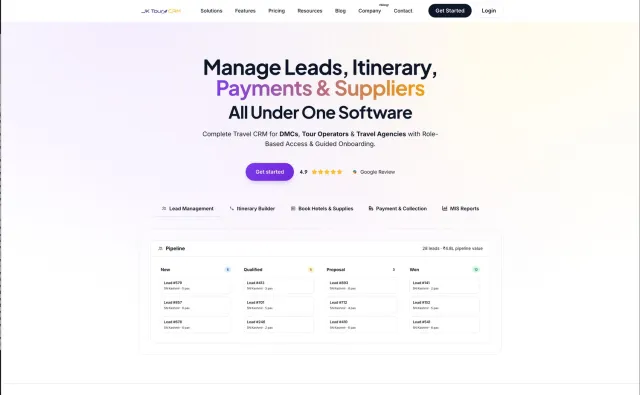
Two CRM builds of mine show the range. JK Tour CRM is a travel CRM for tour operators. For Marmaids LLC, where I work as a freelance developer, I built a CRM together with the API, the Android and iOS apps and the WHMCS module around it, so staff, customers and billing work from the same records.
| Question | Configure a ready-made CRM | Build a custom CRM |
|---|---|---|
| Fit to your process | You work with its objects: contacts, companies, deals. Custom fields stretch them a long way. | Records match the business: bookings, itineraries, supplier payables, job costs. |
| Time to first use | Short. | Longer. A written scope comes first. |
| Cost pattern | A subscription, often per user, that grows with the team. | A build cost, then hosting and upkeep. No per-user fee. |
| Upkeep | The vendor patches it and adds features. | Yours to arrange, through a developer. |
| Data and exit | Held by the vendor. You leave with what its export offers. | A MySQL database on your server. |
Buy when the standard pipeline fits, when you must start this month, or when nobody on your side will own the upkeep. Build when the side spreadsheet has become the real system.
What should the first version of a custom CRM contain?
The first version should contain the one path that earns money: a lead arrives, receives a quote, pays, and the job is delivered. Everything else waits until staff have used that path on real customers.
| Module | In version one | Waits |
|---|---|---|
| Lead pipeline | Stages, an owner, a next follow-up date, activity history and a reason when a lead is lost. | Lead scoring, automatic assignment. |
| Quotes or itineraries | One template with line items and taxes, a PDF or share link, numbered revisions. | A visual template designer. |
| Payments | A payment link, deposit and balance, a receipt once the gateway confirms. | Installment plans, extra currencies. |
| Supplier or partner ledger | What is owed per booking or job, what has been paid, the balance per supplier. | A login for suppliers. |
| Reports | Pipeline value, conversion by lead source, receivables and payables. | Chart dashboards. |
Money is stored as whole minor units (cents or paise) with a currency code, never as floating-point numbers, so the ledger and the reports agree.
How do you import data from spreadsheets or an old CRM?
I rehearse the import in staging first, and you approve a written report before anything reaches the live system.
- Export each sheet or table as UTF-8 CSV and agree a column mapping.
- Normalize values: phone numbers to E.164 form such as
+14155550123, emails to lower case, dates to one format, because03/04/2026is March in one country and April in another. - Merge duplicates, matched by phone and email, under a rule you approve.
- Keep each old identifier in a
legacy_idcolumn, so the import can run again without creating second copies. - Reconcile row counts and money totals against the source, and list each rejected row with its reason.
Free-text notes, attachments and old email threads cost the most to move, so we decide per type what to import and what to archive.
How do roles, permissions and the audit trail work?
Every user has a role, every record has an owner, and every change is written to a log that ordinary users cannot edit. In Laravel the rules live in policy classes, so one check guards the screen, the export button and the API alike.
- Roles. Owner, manager, sales agent and accounts to start. Agents see their own leads, and the accounts role sees payments without being able to change a quote.
- Export and delete. Separate permissions, because a full export is how a customer list leaves with a departing employee.
- Audit trail. Who changed which field, the old and new values and the time. Records are soft-deleted, meaning flagged with a
deleted_atdate, so a mistake can be reversed.
Which tools can a custom CRM connect to?
It can connect to anything with a documented API, and the three I wire in most are WhatsApp, email and payment gateways.
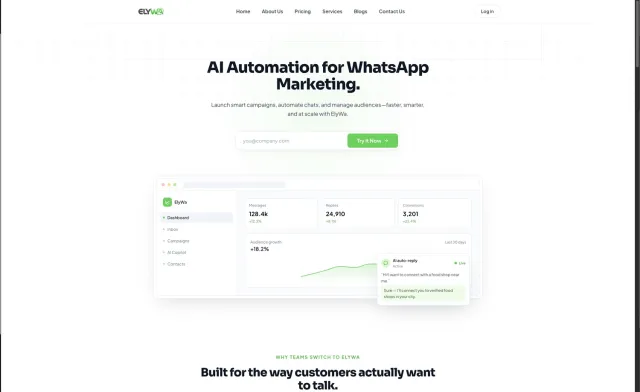
- WhatsApp. The official WhatsApp Cloud API. Incoming messages arrive by webhook and attach to the customer record. Outside the 24-hour window after a customer's last message, outgoing messages use templates that Meta has approved.
- Email. Sent from your own domain with SPF and DKIM records set, and logged on the customer's timeline.
- Payments. Stripe, PayPal or Razorpay. An invoice turns to paid only when a signed webhook arrives, such as Stripe's
checkout.session.completedor Razorpay'spayment_link.paid.
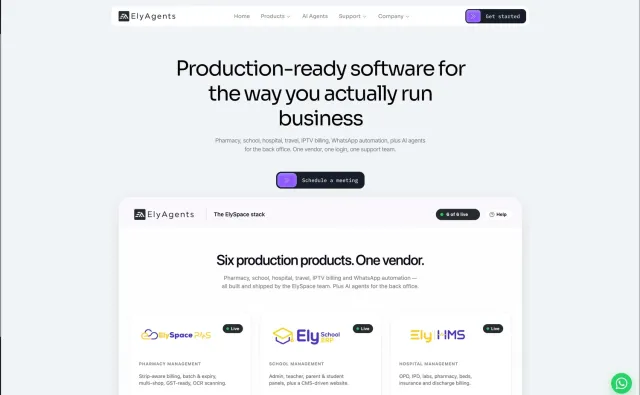
ElyAgents, my own multi-tenant business software, connects to the WhatsApp Cloud API, Stripe, Razorpay and Meta Lead Ads. When the job is mainly moving data between tools you already have, see automation development.
Where does an AI assistant help inside a CRM, and where should it not act alone?
It helps with drafting and summarizing, and it should not send, price or record payments on its own.
- Useful: drafting a quote or itinerary from the lead's notes, summarizing a long chat thread, turning a pasted inquiry into structured fields.
- Not alone: sending a proposal, changing a price or discount, marking money as received, merging or deleting records, messaging many customers at once.
In JK Tour CRM the assistant drafts the itinerary, and a staff member edits and sends it. It runs on the customer's own API key, so the provider bills model usage to them. For an assistant that calls tools under rules, see AI agent development.
Can you build a CRM for a travel agency?
Yes. JK Tour CRM is a travel CRM I built in Laravel for tour operators, destination management companies and travel agencies. It follows one booking from the first inquiry through the itinerary, the proposal and the online payment to the money owed to hotels and transport providers, with a departures calendar and access set by role. It is listed in my portfolio.
Where is the CRM hosted, and who owns the code and the data?
It runs on a server in your name, and the database on it is yours.
- The quote says in writing who holds the rights to the custom code.
- You receive the repository at handover, with deployment and restore steps.
- Gateway, WhatsApp and mail accounts are opened in your company's name.
- A nightly
mysqldumpis copied off the server, and one restore is tested before go-live. - Every main table exports to CSV, so leaving stays possible.
Staff who work away from a desk can later get a mobile app on the same API.
What will I not build into a CRM?
I will not build anything that puts customer data or payment accounts at risk, or rebuild a product you could simply buy.
- No import of scraped or purchased contact lists, and no bulk messages to people who have not opted in.
- No card numbers in the CRM. Card data stays with the payment gateway.
- No clone of another vendor's product and no pirated scripts.
- No replacement for accounting software. The ledger tracks what is owed and paid, and your books stay where they are.
- No legal sign-off. I build consent fields, export and deletion tools, and your adviser decides the privacy policy.
What does a custom CRM cost, and how do we start?
The price is a fixed quote for a written scope, or $55 to $65 per hour. It follows the number of record types, roles and integrations, and the state of the data to import. We start with a free scoping call of about 30 minutes, and the written quote reaches you within one business day. I build in a staging copy, and two weeks of support follow delivery. See how I work. A CRM you plan to sell to other businesses by subscription is SaaS development.
Who this is for
- Businesses that run sales and delivery from spreadsheets and chat threads and lose track of who promised what
- Tour operators, travel agencies and destination management companies that quote itineraries and pay suppliers per booking
- Companies paying for a CRM where half the screens go unused and the real process lives in a side spreadsheet
- Owners who need customer and payment records on a server they control
What is included
- Written scope with pipeline stages, record types, roles and a list of features that wait
- Lead pipeline with owners, follow-up dates and an activity history per customer
- Quote, proposal or itinerary builder that produces a PDF or a share link
- Payment links and a signed webhook receiver for Stripe, PayPal or Razorpay
- Supplier or partner ledger showing what is owed, paid and outstanding
- Roles, record-level permissions and an audit trail of who changed what
- Import of your existing data, rehearsed in staging and reconciled against the source
- Repository, deployment notes, a data export and a walkthrough call
How the work runs
-
1
Map the process
On a free call of about 30 minutes I ask how a lead arrives, who handles it and where money changes hands. A written scope and quote follow within one business day.
-
2
Model the records
I draw the tables, the pipeline stages and a permission matrix. You review them once, before any code exists, because a wrong table is the costliest thing to change later.
-
3
Build module by module
I build in a staging copy, pipeline first. You get a daily progress update and a login, so your staff can try each module as it lands.
-
4
Rehearse the import
Your spreadsheets or old CRM export are loaded into staging. You receive a report of rows imported, merged and rejected, and we correct the mapping or the source.
-
5
Go live
I run the final import, switch to live payment keys, make one real test payment and walk your team through the system on a call.
-
6
Hand over
You receive the repository, the deployment and restore notes and a written user guide. Two weeks of support cover defects in the delivered scope.
Guides on this topic
All guides →Frequently asked questions
Is a custom CRM better than HubSpot or Zoho?
Not by default. A ready-made CRM such as HubSpot or Zoho is the better choice when your sales process is a standard pipeline, the team is small and you need to start this month. A custom CRM earns its cost when you sell something the ready-made tool models poorly, such as itineraries, supplier payables or per-job costing, and staff already keep the real data in a side spreadsheet. On the scoping call I tell you plainly if buying is the better route.
How long does it take to build a custom CRM?
It depends on scope. A first version with one pipeline, one quote template, payment links and a few fixed roles is the short end. Messy import data, extra roles, a supplier ledger and each outside integration add time. I give a delivery date once the scope is written down after the scoping call, and I do not name dates before that.
Can you import my customer data from Excel or another CRM?
Yes. I take a CSV export of each sheet or table, map the columns with you, normalize phone numbers, emails and dates, and merge duplicates by a rule you approve. The import is rehearsed in staging first, and you get a report of rows imported, merged and rejected. Money totals are reconciled against the source before the final run on the live system.
Can a custom CRM send and receive WhatsApp messages?
Yes, through the official WhatsApp Cloud API. Incoming messages arrive by webhook and are stored on the customer record, and staff reply from inside the CRM. Outside the 24-hour window after a customer's last message, outgoing messages must use templates that Meta has approved, and customers need to have opted in. The WhatsApp Business account and number stay in your company's name, and Meta bills its message fees to you.
Do you build CRM software for travel agencies and tour operators?
Yes. I built JK Tour CRM, a Laravel travel CRM for tour operators, destination management companies and travel agencies. It covers a lead pipeline, an itinerary builder with AI drafting, proposals, online payment through Stripe, PayPal or Razorpay, a supplier ledger and a departures calendar, with access controlled by role. A CRM for your agency would start from your own booking process, not from a copy of that product.
Who owns the CRM code and the customer data?
The quote says in writing who holds the rights to the custom code, and that is settled before any work begins. Open-source packages keep their own licenses. You receive the repository at handover. The database runs on a server in your name, and the payment, WhatsApp and mail accounts are opened by your company, so the customer records and the credentials stay with you if you change developers.
What does custom CRM development cost?
I give a fixed quote for a written scope, or bill $55 to $65 per hour. The price follows the number of record types, roles, reports and integrations, and how clean the data to import is. Hosting, domain, payment gateway and WhatsApp message fees are charged to you directly by those companies. The scoping call of about 30 minutes is free, and the written quote arrives within one business day.
Related services
-
SaaS Developer: Build a SaaS Website or Product
Freelance SaaS developer for SaaS websites, MVPs and customer portals on Laravel and Filament, with Stripe, Pa...
-
Business Automation Development: Connect the Tools You Already Use
Business automation development by a workflow automation developer: webhooks, APIs, scheduled jobs, n8n or cus...
-
AI Agent Development: Hire an AI Agent Developer
AI agent development for hosting and SaaS teams: agents that answer tickets from your knowledge base, update W...
-
Mobile App Development: Android and iOS App Developer
Mobile app development for Android and iOS from one Flutter or React Native codebase, with a Laravel or NestJS...
Ready to talk about your project?
Send the details and I reply within one business day with questions, an estimate and a plan.