
Freelance Laravel developer
Hire Laravel Developer: Apps, Filament Panels, Upgrades and AI
I am Shahid Malla, a freelance Laravel developer with 13+ years and 900+ projects behind me. SaaS founders, businesses and agencies hire me to build Laravel applications, Filament admin panels and APIs, to move old Laravel apps to a supported version, and to add AI features to apps they already run.
Free scoping call of about 30 minutes · written quote within one business day · two weeks of support after delivery
By Shahid Malla, AI agent and AI chat developer, full-stack developer · Updated
What do I build as a freelance Laravel developer?
I build the Laravel applications a business runs on: SaaS products, CRMs and internal tools, booking platforms, customer portals, APIs and the admin panels behind them. One developer handles the data model, code, tests and deployment.
| Project | What it usually includes | Laravel example you can look at |
|---|---|---|
| SaaS product or CRM | Lead pipeline, proposals, online payments, supplier ledger, role-based access | JK Tour CRM, a travel CRM I built for ElySpace, where I am CTO (an ElySpace product, not a client project) |
| Admin panel | Resources, filters, roles and settings for staff | This website, which runs on Laravel with a Filament admin panel |
| Booking website | Dates and guests, add-ons, pay now or reserve, customer accounts | Kohwan: ski packages, lessons, lift passes and rentals in Gulmarg, Kashmir |
| Hotel or business website | Rooms, services and add-on packages | Hôtel Spa Le Suisse, a boutique spa hotel in Quebec, Canada |
| Publishing or workflow platform | Submissions, editor tools, public article pages | SRJ Journal: article and issue management, DOI details, manuscript submissions |
APIs for mobile apps and partners are versioned from the first route, with token authentication such as Laravel Sanctum.
When should you hire a Laravel developer directly instead of an agency?
Hire one experienced developer directly when the work fits in one person's head: one product, one admin panel, one upgrade or one set of AI features. You talk to the person writing the code, with no account manager in between.
An agency or a staffing marketplace fits better when you need several developers at once, a designer and a project manager under one contract, or someone on call around the clock. I am one developer, and I say so before you sign.
Whoever you hire, ask three things: which live Laravel work you can open, which Laravel and PHP versions they would choose and why, and who reads the code before it reaches production.
Can you upgrade an old Laravel app to Laravel 13?
Yes. I move an app one major version at a time, following Laravel's upgrade guide for each step, on a staging copy, with the tests run after every step. Skipping versions saves nothing, because each guide lists the breaking changes for its own step only.
The support table in the Laravel release notes shows why it matters:
| Version | PHP | Bug fixes until | Security fixes until |
|---|---|---|---|
| Laravel 10 | 8.1 - 8.3 | August 6, 2024 | February 4, 2025 |
| Laravel 11 | 8.2 - 8.4 | September 3, 2025 | March 12, 2026 |
| Laravel 12 | 8.2 - 8.5 | August 13, 2026 | February 24, 2027 |
| Laravel 13 | 8.3 - 8.5 | Q3 2027 | March 17, 2028 |
The framework step is rarely the slow part. The time goes into the PHP version on the server, packages nobody updated, and code that relies on old defaults. The official upgrade guide estimates 10 minutes for the move from 12.x to 13.0, and still lists changes that need a decision:
- The CSRF middleware is now
PreventRequestForgery;VerifyCsrfTokensurvives only as a deprecated alias, so references to it get updated. - The new skeleton sets the session
serializationoption tojson. Switching an existing app fromphpsigns every user out, so we pick the moment together or keepphp. - The cache config gains
serializable_classes, set tofalse. An app that caches PHP objects needs an explicit list of allowed classes.
The guide also names Laravel Shift, a community-maintained upgrade service, and the /upgrade-laravel-v13 command that Laravel Boost adds to Claude Code for apps on Laravel 12. Whatever drafts the changes, I review each one and run the full test suite.
What does a Filament admin panel give your team?
It gives your staff a back office for lists, filters, forms, dashboards and permissions, built on your existing Laravel models in the same codebase as the app. Filament describes itself as a server-driven UI framework for Laravel: screens are defined in PHP, on top of Livewire, Alpine.js and Tailwind CSS.
This website's blog posts, invoices, coupons, contact messages, menus and settings are all managed in a Filament panel. In a client panel I set up:
- A resource for each business object, with the filters and bulk actions your staff use
- Roles and policies, so a support agent cannot issue refunds or delete records
- Dashboard widgets for the few numbers someone checks every morning
- Actions that call your own services, such as sending a quote, instead of editing raw rows
The current major release, Filament 5, needs PHP 8.2+, Laravel 11.28+ and Livewire 4 (Filament upgrade guide). Older panels move forward with Filament's upgrade script, but the v5 guide warns that manual changes may still be needed and that some plugins may not support v5 yet, so I check every plugin before starting.
How do you add AI features to a Laravel app?
On Laravel 12 or 13, a good base is the Laravel AI SDK, Laravel's own package that puts providers such as OpenAI, Anthropic and Gemini behind one API for agents, tools, structured output and embeddings. Its current release requires PHP 8.3 and Laravel 12 or 13, so an older app is upgraded first.
- An assistant inside your app that answers from your own records, with conversations saved by the SDK's
RemembersConversationstrait. - Drafting of proposals, replies or summaries as structured output your code can check. In JK Tour CRM, an AI assistant can draft an itinerary using the customer's own API key.
- Semantic search over documents with embeddings; Laravel 13 adds vector queries for PostgreSQL with pgvector.
- An MCP server built with Laravel MCP, so AI clients can use your app's tools and data, protected by OAuth through Laravel Passport or by Sanctum tokens.
Three safeguards go into every AI feature. Tools that change data are marked as needing approval, and the agent pauses until a person approves the call. Failover sends a request to a backup provider when the main one is rate-limited or unavailable. Tests fake the agent with fake() and preventStrayPrompts(), so the suite never calls a paid API. For agents that act across several systems, see AI agent development.
How do you use Claude Code on a Laravel project without losing control?
I treat Claude Code as a fast assistant whose work I check, never as the developer of record. Each task starts with a short plan I approve, runs in its own branch, and ends with passing tests and my reading of the whole diff.
On Laravel 12 and newer, Laravel Boost, Laravel's first-party package for AI-assisted work, can be added. It writes Laravel guidelines into CLAUDE.md and AGENTS.md inside its own block, leaving your own rules intact, and lets the agent read the database schema, the last logged error and the docs for your installed versions. Production credentials never reach the agent; it works against a local or staging database.
The full routine is in my Claude Code workflow for client projects; for work outside Laravel, see Claude Code development.
Who owns the code, the repository and the accounts?
You own the repository and every account. The repository lives in your GitHub or GitLab account, or moves there at handover if I start it in mine, and the server, domain, payment and AI provider accounts are opened in your name. I work with access you grant and can remove at any time. Who holds the rights to the custom code is written into the quote before work starts, and open-source packages keep their own licenses.
How do you test and hand over a Laravel project?
With feature tests that use the app the way a person does, written in Pest or PHPUnit to match your project and run on every change. They cover the core workflow, each permission rule, payment webhooks and AI calls with faked responses. For an upgrade, I write the tests first against the old version, so they prove the new version behaves the same.
At handover you receive:
- The repository, with a README that sets the project up in a few commands
- Every environment variable listed and explained, with no secret values in the code
- Deployment, rollback and backup-restore steps, with queue worker and scheduler settings
- A walkthrough call, then two weeks of support for defects in the delivered scope
The day-to-day routine is on how I work.
Which Laravel projects do I turn down?
I turn down work I cannot do well or honestly. That covers nulled or pirated scripts and paid packages without a license, copies of another company's product, and one-off error fixes with no wider project, which your host's support or an AI assistant handles faster. I do not certify apps against PCI DSS or SOC 2.
Who this is for
- SaaS founders who want a Laravel product built by one developer who answers for all of it
- Companies running a Laravel app on a version that no longer gets security fixes
- Teams whose staff need an admin panel over data that now lives in spreadsheets or raw database tools
- Agencies that need a senior Laravel developer for one client project, working in their repository
- Product owners who want AI chat, search or drafting inside a Laravel app they already run
What is included
- A written scope with roles, data model and acceptance tests, and a quote within one business day
- A Laravel application or API with policies, validation, queued jobs and scheduled tasks
- A Filament admin panel with resources, filters, roles and the actions your staff use daily
- Version upgrades one major release at a time, run on staging against your test suite
- AI features on the Laravel AI SDK or Laravel MCP, with approval steps for risky actions
- Feature tests in Pest or PHPUnit for the core workflow, permissions, payments and AI calls
- Handover: repository in your account, README, deployment notes, a walkthrough call and two weeks of support
How the work runs
-
1
Scoping call
A free call of about 30 minutes about your users, screens, data and deadline. Within one business day you get a written scope and a fixed quote, or an hourly estimate for open-ended work.
-
2
Read before writing
For an existing app I clone the repository, run its tests and check the Laravel, PHP and package versions against Laravel's support table. You hear what I found before I change anything.
-
3
Build on staging
Work happens on a staging copy in small pull requests. Claude Code drafts much of the code; I plan each task, read each diff and send you a short progress update every day.
-
4
Test every change
Feature tests cover the workflow, permissions, payments and AI calls, with AI responses faked so test runs cost nothing. Nothing merges until the tests pass and I have reviewed it.
-
5
Release
I deploy to your server or platform, run the migrations, start the queue workers and the scheduler, and watch the logs and failed jobs after go-live.
-
6
Hand over
You get the repository, a README, deployment and rollback notes and a walkthrough call. Two weeks of support for defects in the delivered scope follow.
Recent work
All case studies →-
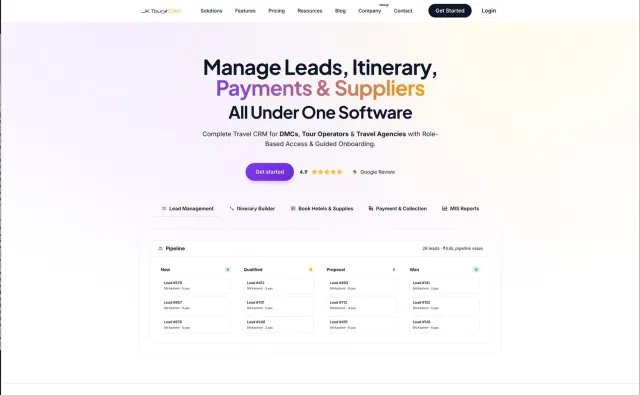
ElySpace product (I am CTO)
JK Tour CRM
Travel CRM for tour operators, DMCs and travel agencies
-

Client project
Kohwan
Ski and tour booking website for Gulmarg, Kashmir
-

Client project
Hôtel Spa Le Suisse
Website for a boutique spa hotel in Quebec
-
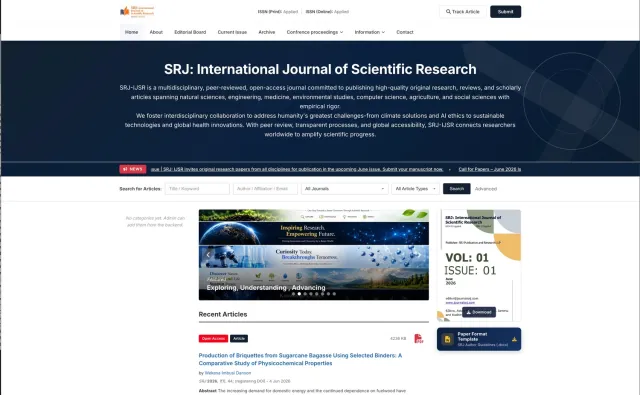
Client project
SRJ Journal
Publishing platform for an open-access scientific journal
Guides on this topic
All guides →-
SaaS MVP Tech Stack: How to Choose for Your First Release
A founder's guide to a SaaS MVP tech stack: Laravel with Filament, Next.js with NestJS or no-code first, where to host, which billing provider fits, how to separate tenants and what to leave out of version one.
-
My Claude Code Workflow for Client Projects: Steps and Guardrails
How I run Claude Code, with Codex as a second agent, on paid client projects: the spec, the rules files, plan mode, worktrees, hooks, reviews, MCP limits, staging and the handover your team keeps.
-
How to Update PHP on a Server and Secure It: Linux, cPanel, Plesk
How to update PHP on AlmaLinux, Rocky, Ubuntu, Debian, cPanel, Plesk, DirectAdmin, CloudLinux and Docker, checked against each vendor's docs, plus a server hardening checklist with one reason per item.
-
AI-Assisted Development vs Vibe Coding: What Is the Difference?
The difference between AI-assisted development and vibe coding is not the model. It is whether anyone reads, tests and owns the code. Definitions, verified risks, a review checklist and a rescue plan.
-
Developer Retainer vs Hourly vs Fixed Price: Which Should You Pick?
How hourly billing, fixed-price projects and a monthly developer retainer work, who carries the risk in each, which kind of work suits which, and what to write into a retainer agreement.
Frequently asked questions
How much does it cost to hire a Laravel developer?
I work at $55 to $65 per hour, or for a fixed price agreed on a written scope. There are no packages. The price follows the number of roles, screens and integrations and, for an upgrade, how many major versions and outdated packages stand between your app and Laravel 13. The scoping call is free and takes about 30 minutes, and the written quote follows within one business day. Hosting and AI usage are billed to you directly by those providers.
Which Laravel version should a new project start on?
Laravel 13, the current major release. Laravel's release notes give it a release date of March 17, 2026, bug fixes until Q3 2027 and security fixes until March 17, 2028, and it requires PHP 8.3 or newer. Laravel ships a new major version about once a year, in the first quarter, so a project started on 13 has a long supported life and a documented upgrade path each year.
Is my current Laravel version still supported?
Check the support table in Laravel's release notes. Each release gets bug fixes for 18 months and security fixes for 2 years. As of October 2026, Laravel 10 and 11 get no fixes at all; security fixes for Laravel 11 ended on March 12, 2026. Laravel 12 gets security fixes only, until February 24, 2027. An app on any of these keeps running, but new framework vulnerabilities will not be patched for it.
Can you work on Filament 3 or 4 panels, not only Filament 5?
Yes. An older panel can be extended as it is, or moved forward when the upgrade is worth it. Filament 5 needs PHP 8.2+, Laravel 11.28+ and Livewire 4. Filament provides an automated upgrade script for each major version, vendor/bin/filament-v4 and vendor/bin/filament-v5. Its own v4 guide says the script does not handle all breaking changes, so I run it in a branch, review its changes and test every resource on staging before release.
Do you write the code yourself or with AI?
Both. I build with Claude Code, Anthropic's coding agent: I write the plan, the agent drafts code, and I read every diff before it merges, with the tests run on every change. On Laravel 12 and newer, Laravel Boost, Laravel's package that gives AI agents Laravel guidelines and a documentation search tool, can be added to the project. I am not affiliated with Anthropic or Laravel; I name the tools so you know how the work is done.
Can you join our agency or in-house team as a Laravel developer?
Yes. I work in your repository, follow your branching and review rules, and deliver pull requests your own developers can review. For an agency, I can take the Laravel part of a client project and work inside your process. If the code has no tests yet, I add them around the parts I change first, so my work does not break what yours depends on.
Do you work with clients in the US, Canada, the UK and Australia?
Yes, remotely. My portfolio includes a Laravel website for Hôtel Spa Le Suisse in Quebec, a client portal for RealBytes, an Australian hosting provider, a website for CornerHost, an Australian managed WordPress host, a website for Krunus, a UK hosting provider, and a Next.js store for Chargewise, which ships across the United States and Canada. Of these, only the Quebec hotel site is a Laravel project. Calls, the written scope and progress updates all happen online.
Related services
-
SaaS Developer: Build a SaaS Website or Product
Freelance SaaS developer for SaaS websites, MVPs and customer portals on Laravel and Filament, with Stripe, Pa...
-
Custom CRM Development: Hire a CRM Developer
Custom CRM development in Laravel for businesses that HubSpot or Zoho does not fit: pipeline, quotes, payments...
-
Hire Claude Code Developer: Claude Code Expert for SaaS and CRM
Hire Claude Code developer or Claude Code expert Shahid Malla: 13+ years, 900+ projects. SaaS, CRMs and apps b...
-
AI Agent Development: Hire an AI Agent Developer
AI agent development for hosting and SaaS teams: agents that answer tickets from your knowledge base, update W...
Ready to talk about your project?
You deal with me personally from the first message to the handover. Choose the way that suits you; I reply within one business day.